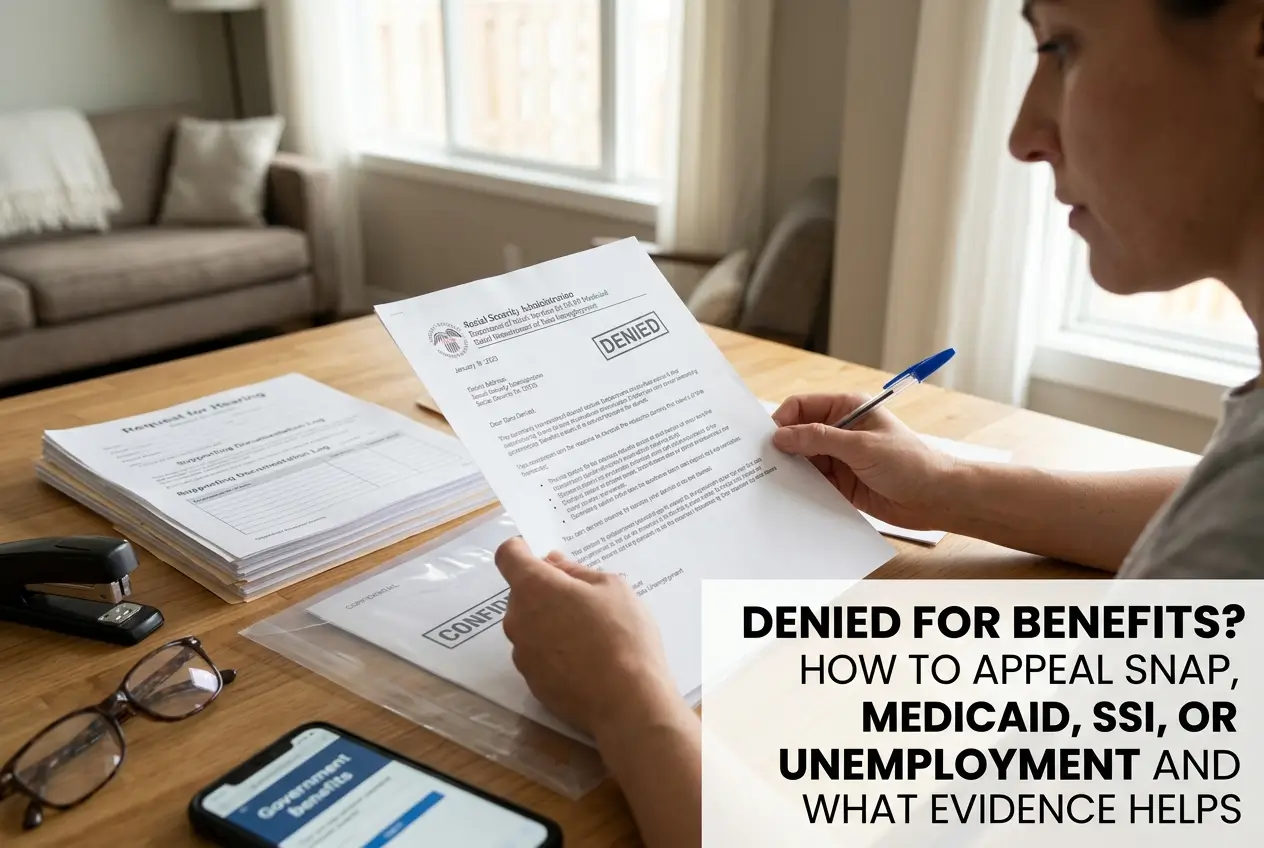
Denied for Benefits? How to Appeal SNAP, Medicaid, SSI, or Unemployment and What Evidence Helps
Getting denied for benefits can feel completely overwhelming. But you have the legal right to fight back.
An appeal can restore your SNAP, Medicaid, SSI, or Unemployment. You just need to act fast.
This step by step guide shows you exactly how to challenge a denial. Learn what evidence you need to win.
Do not let a mistake cost your lifeline. The government makes errors often.
Taking immediate action is the only way to protect your rights. Read on to start your process.
Understanding Your Right to Appeal
A denial letter is not the end of the road. It is just the government making an initial choice.
O que Mais Você Gostaria de Saber?
Escolha abaixo:
You have the legal right to request a Fair Hearing. This forces an impartial judge to review your case.
Many initial denials are actually overturned on appeal. This happens very often when missing paperwork is found.
Do not lose hope if you get a rejection notice in the mail. Mistakes happen daily in this system.
You do not need to be a lawyer to start this process. You simply need to be organized.
Check Your Deadlines Immediately
Time is your absolute biggest enemy right now. You must act within specific windows to protect your rights.
Every denial letter includes appeal instructions. It must state your exact deadline.
Deadlines change depending on the specific government program. Missing this window means starting over entirely.
- SSI and Social Security: usually give you 60 days to file.
- SNAP and Medicaid: programs often allow up to 90 days.
- Unemployment benefits: deadlines can be incredibly short at 15 days.
Count the days starting from the date on the notice. Do not wait.
Keep the original envelope to prove when the letter arrived. Late mail delivery can excuse a late filing.
Keeping Benefits While You Wait
You might be able to keep your current payments flowing. This special rule is called Aid Paid Pending Appeal.
This only applies if your active benefits are being cut off. It does not apply to new applications.
You must request this extremely fast. Most states require action within ten days.
Check your official letter right now for this specific date. Missing the ten day mark stops your money.
Warning: If you lose the appeal, you may have to pay back the money you received during this time.
You must weigh the risks of keeping your benefits active. Talk to a legal expert if you are unsure.
How to Submit Your Official Request
Do not rely on phone calls. Always submit your hearing request in writing.
Using an official state portal is the absolute safest method. It gives you an instant digital receipt.
For SSI, you can file your appeal online. Visit the official website.
- Official Forms: Fill out the Fair Hearing Request form included in your letter.
- Written Statement: Write a simple letter stating you disagree and want a hearing.
- Digital Upload: Use your state online benefits portal if it is available.
- In Person: Submit documents at the office and ask for a stamped receipt.
Always keep a copy of your submitted request for your records. Write down the exact date and method.
Build a Strong Evidence Packet
You do not need a law degree to win your case. You simply need clear evidence that proves you are right.
The goal is to directly address why you were rejected. Read the specific reason on your letter and focus there.
If they said your family is too large, prove your household size. Provide school records and lease agreements.
- Notice Letter: Keep the original denial notice handy at all times.
- Income Proof: Collect recent pay stubs and tax return documents.
- Medical Proof: Get medical records for any disability or health claims.
- Job Records: Ask previous employers for official termination letters.
- Expense Proof: Gather rent receipts and monthly utility bills.
Never send original documents. Make clean copies and keep your originals safe.
Gather Proof for Medical Denials
Medicaid and SSI denials often involve confusing medical jargon. Sometimes they claim a treatment is not medically necessary.
You need strong support from your primary care doctor here. Ask your physician to write a detailed letter.
This letter must explain why the specific treatment is vital. It should include your exact diagnosis and history.
Winning an SSI appeal requires extensive medical evidence. The federal government denies most first claims automatically.
You must prove that your condition prevents you from working. A simple doctor note is never enough for SSI.
Gather every single medical record, test result, and scan. You need comprehensive proof of your daily limitations.
Create a Simple Timeline of Events
A timeline makes your complex case incredibly easy to read. Judges deeply appreciate clear and simple summaries.
Write a simple one page sheet listing what happened and when. Start from the very first day you applied.
Include the dates of phone calls and when you sent papers. This proves you followed all the rules correctly.
Review your file before the hearing. You have the right to see exactly what the agency used against you.
Ask the agency for your complete case file right away. Finding their mistake is much easier when you see their notes.
What to Expect at the Fair Hearing
Your hearing might happen by phone, by video, or in person. You will receive an official notice with the details.
An Administrative Law Judge will review the actual facts. This person is impartial and does not work for the caseworkers.
You can choose to represent yourself at this important meeting. You can also bring a friend or legal advocate.
You will have a fair chance to explain your side clearly. The judge will ask detailed questions about your proof.
Be completely honest and stick to the real facts of your case. Speak clearly and answer questions very directly.
Where to Find Free Legal Help
You absolutely do not have to fight this legal battle alone. Free resources are available to help you prepare.
Look for your local Legal Aid office online immediately. They provide free legal assistance to low income families.
- Legal Aid: Search online for Legal Aid organizations near your home.
- SHIP Office: Contact the State Health Insurance Assistance Program.
- Disability Help: Reach out to disability rights groups in your specific state.
- Community Support: Call local community action agencies for guidance.
These organizations offer unbiased and completely free help. Call them the same day you get your denial letter.
Common Mistakes That Ruin Appeals
Missing the deadline is the absolute most common mistake. Late appeals are almost always rejected immediately.
Another fatal error is submitting totally unorganized paperwork. Never hand over a messy pile of loose receipts.
Getting angry at the hearing will instantly hurt your case. The judge expects you to remain calm and professional.
Never guess an answer if you do not know the real truth. Simply tell the judge you do not know.
Finally, do not ignore requests for additional information. Respond to all new letters from the agency right away.
Your Next Steps to Regain Benefits
Read your denial notice carefully as soon as it arrives. Find the exact final deadline and mark it on your calendar.
Decide right away if you need to request continued benefits. Remember you only have ten short days for this request.
Submit your official appeal in writing or through the portal. Always request a full copy of your agency case file.
Gather your critical evidence and organize it by date. Contact your local Legal Aid office if you need representation.
Taking immediate action is the best way to protect yourself. Stay organized, be persistent, and demand your fair hearing today.
How to Build Credit from Scratch in the U.S.: Starter Cards, Secured Cards, and Credit Builder Loans
» Veja dicas de Moda e Beleza exclusivas para você